Scheduler
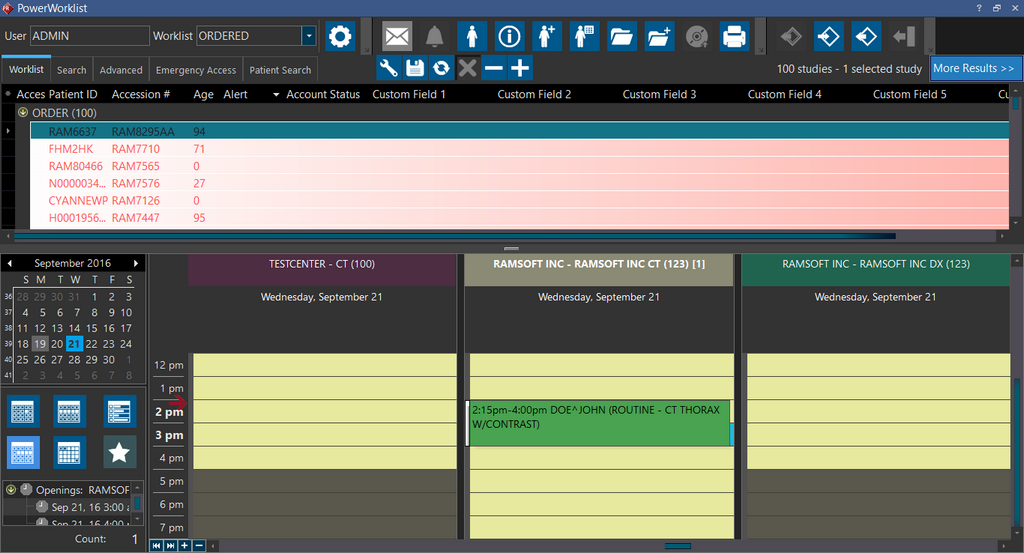
The Scheduler is used to keep track of the resources and their use. It is similar to a detailed calendar or planner where events (studies) can be listed at the appropriate time and date. When enabled, users are able to view and schedule studies in the facilities they are a part of. System Wide Administrators and users who are not bound to any facility will be able to view all facilities in the scheduler.
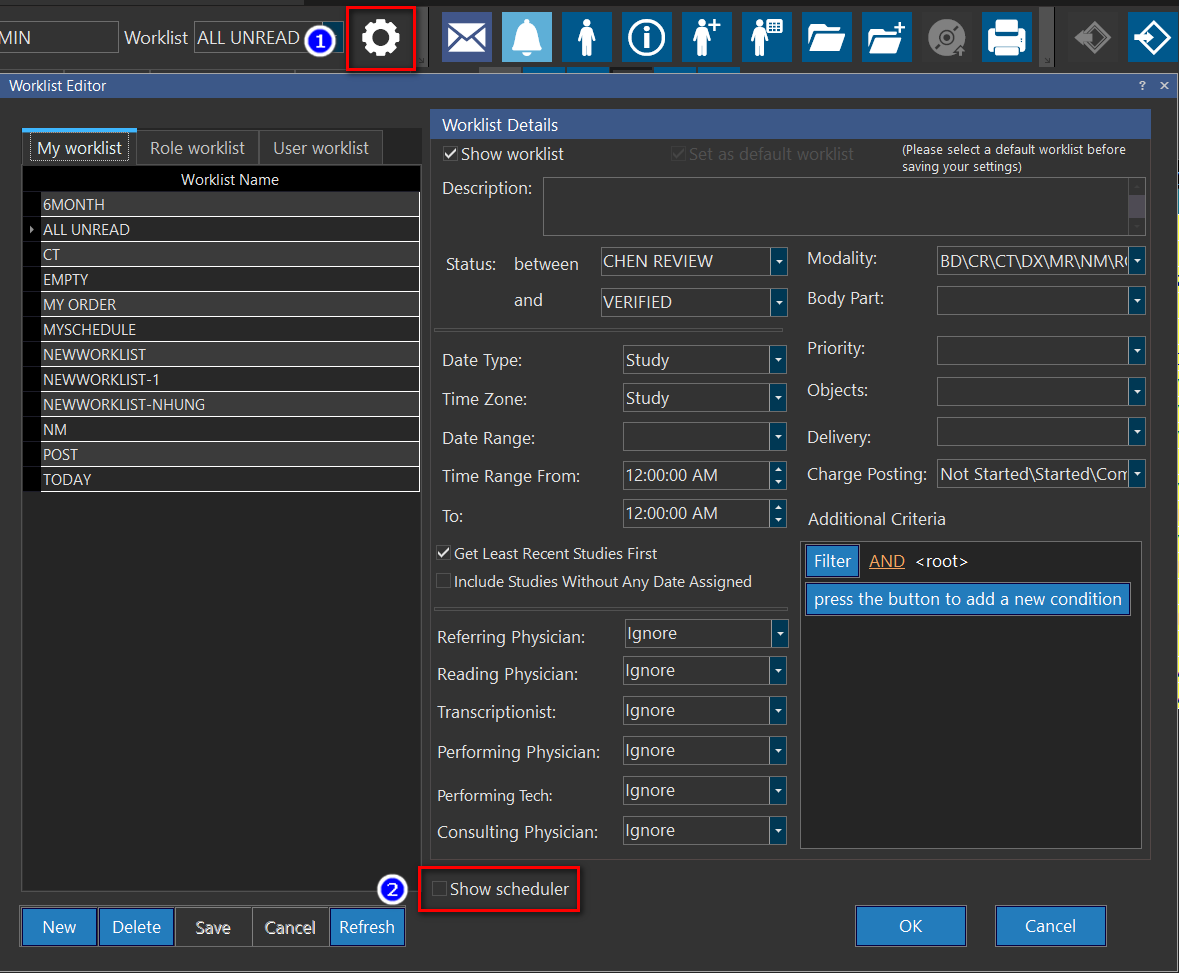
To display the Scheduler, click on the Worklist Settings icon and check the "Show Scheduler" option.
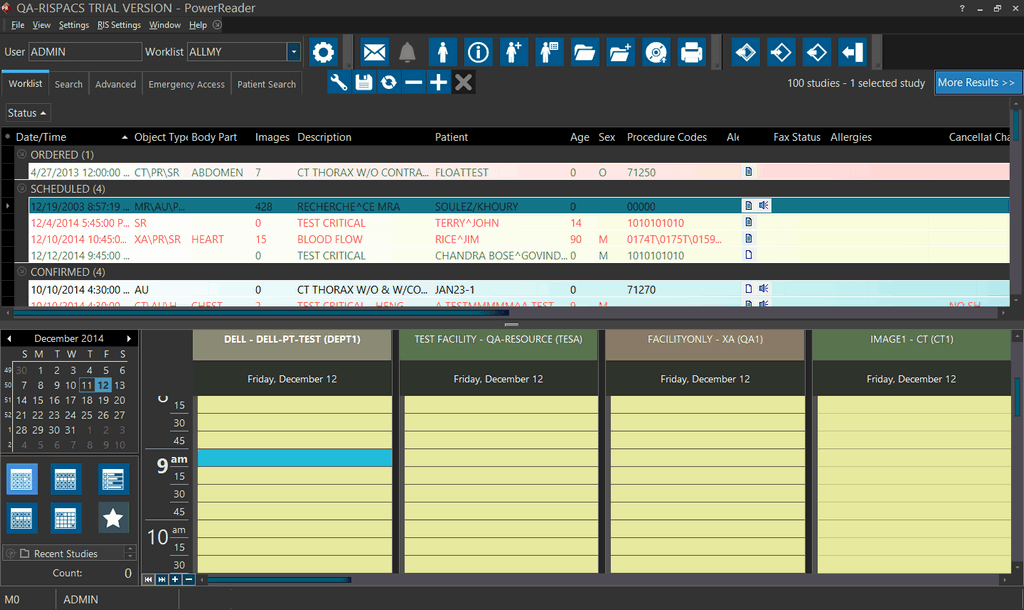
The Show Relevant Resources option displays resources matching the Scheduled Modality of the currently selected study in the Worklist.
Scheduling A Study With No Modality
You can schedule a study with no modality in any resource by disabling the Show Relevant Resources  option. This allows the ordered study to be scheduled in a Resource and associates the study to the modality supported by the resource.
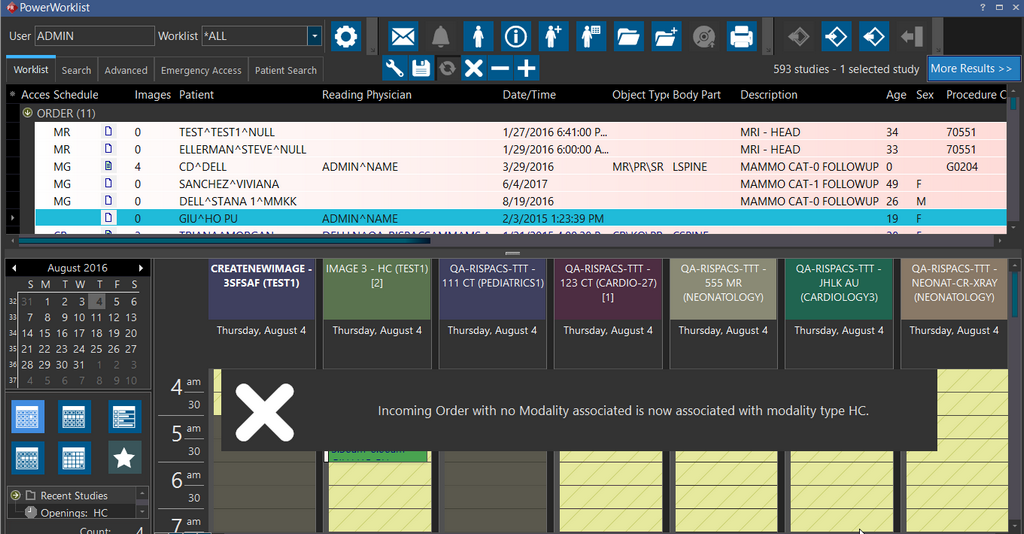
When dragging a study with no modality to any resource, the confirmation message "Incoming Order with no Modality associated is now associated with modality type <Modality Name>." is displayed. For example, a study with no modality has been assigned to a resource that supports the modality type HC in the screen displayed below.
Users with the Schedule Studies privilege can perform modifications in the scheduler. The Schedule Studies privilege can be granted to a user through Users and Facilities > Roles. With this privilege, the user will be able to view the resources for facilities they belong to. To view every resource from all the facilities, a user must have the System-wide Admin privilege.
Using the Calendar
The scheduler is divided into resources and each resource can display multiple days. To select the days displayed, the calendar on the left section of the screen can be used.

The currently selected days are highlighted in grey. Days with a scheduled event are displayed in bold and the current date is displayed with a red box.
Selected dates can be dropped into the scheduler from the calendar. The Ctrl or Shift key can be used to select multiple consecutive dates over two weeks, or dates scattered over a period of 15 days.
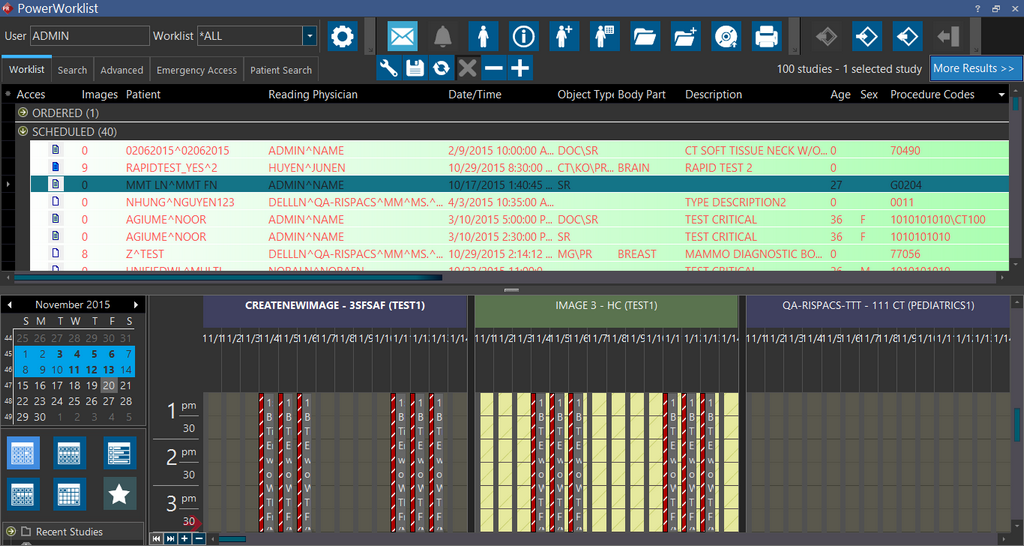
The following screenshot displays a scenario where 14 consecutive dates have been selected for viewing in the calendar by holding the Ctrl key and selecting the required date range. The scheduler matches the selection by displaying the selected days in the scheduler either in a week or month view based on the number of days selected.
Tip: Click the Show Fewer Resources  button to decrease the number of visible resources to ensure you have a daily view of a Resource. Scroll to the required resource. It is recommended to use the Daily View to have a better view of how a Resource is scheduled for a given day.
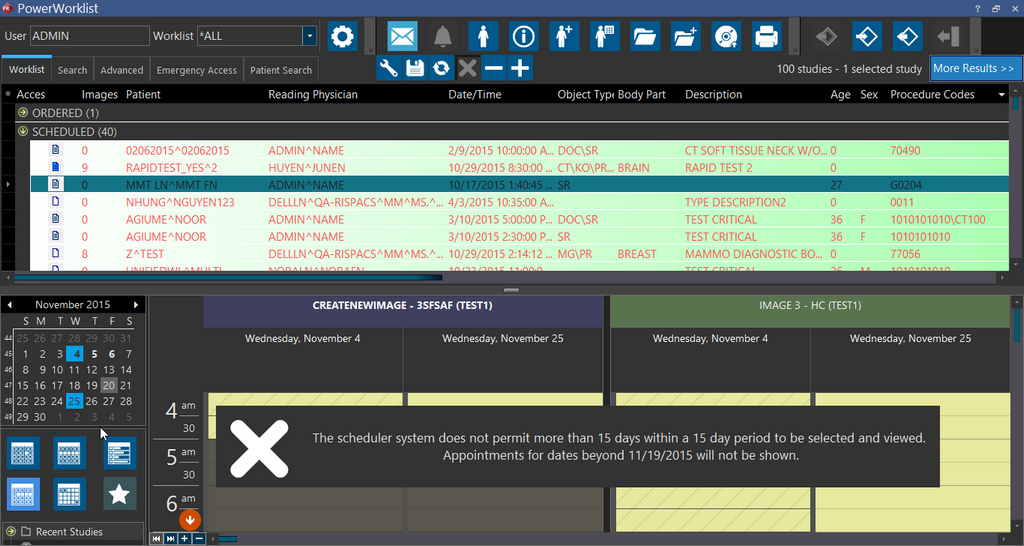
When selecting a date range that is beyond the 15 days range, the following message is displayed:
The month can be changed by clicking on the month name or scrolling to the left or right of the month name. Multiple months can be viewed simultaneously by expanding the bottom or right border of the calendar. A warning is also displayed if an appointment is scheduled outside the authorization dates range.
A quick way to change the number of days displayed is by using the built-in presets below the calendar.
 View One Day
 View One Week
 View Time Grid
 View One Work Week
Enlarging and Restoring a Resource
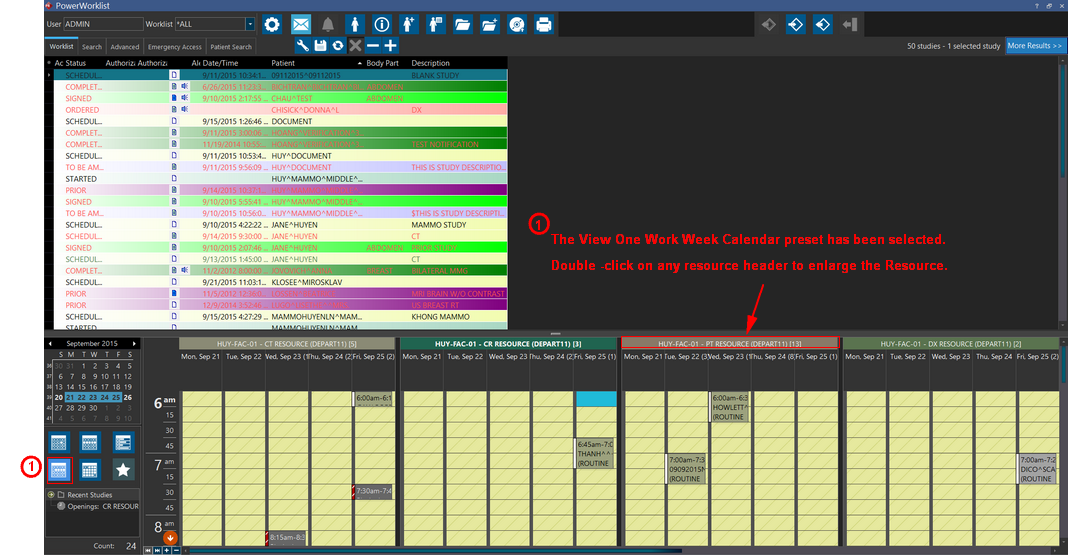
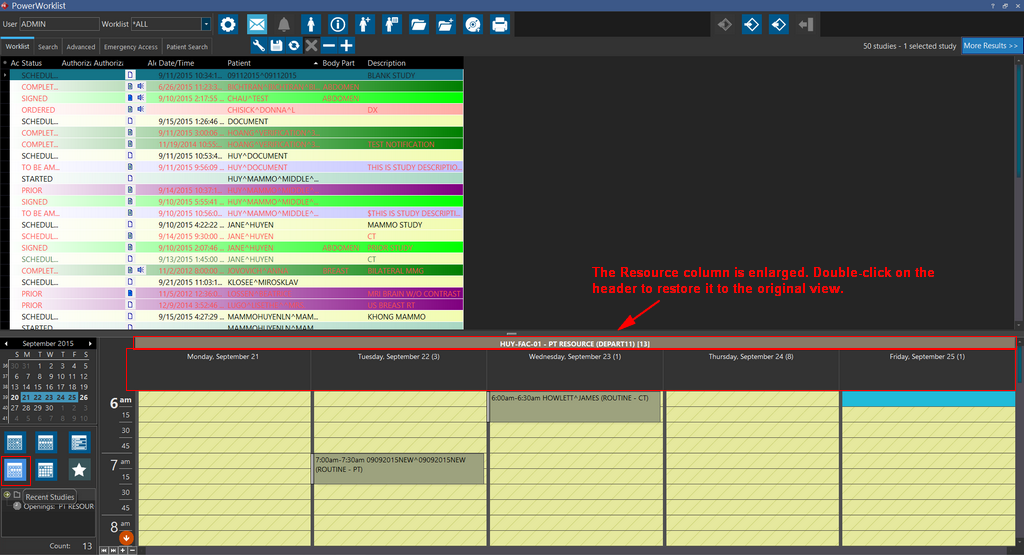
When using the above Calendar presets, a resource can be enlarged by double-clicking on the resource header in the Scheduler. The following screen displays a scenario when a user has selected the View One Work Week calendar preset and needs to enlarge a specific resource column:
 View One Month
Show Relevant Resources
Depending on the time scale, each day has a number of time slots. The All Day Slot is located immediately below the date. The white border on the left side of the day changes to red with white stripes for the scheduled time.
The time scale of the scheduler can be changed by right-clicking on the scale and then selecting the desired interval.

Scheduling a study for appointment
Method 1: Right-Click on Open Time Slot
The various resources of a facility and their timings are determined in the Resources section of the Settings > Users and Facilities > Imaging Facilities tab. Right-clicking the mouse on an open time slot displays the following menu:
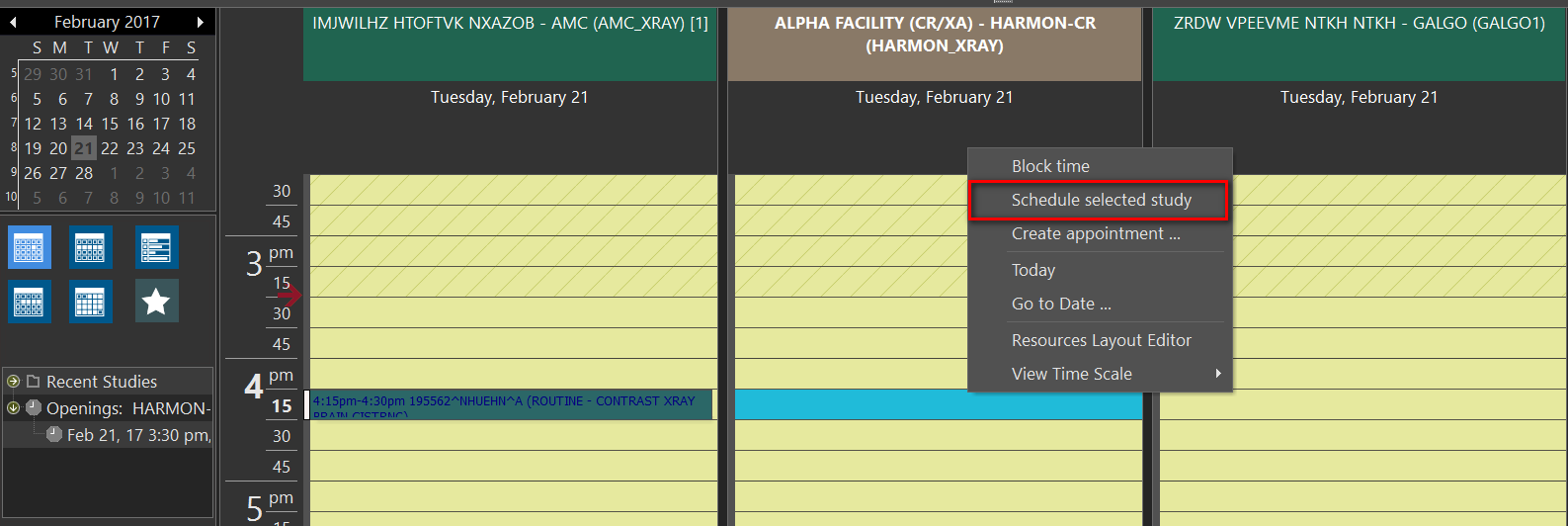
To schedule the study which has been currently highlighted in the Worklist, select the Schedule selected study option. This will automatically place the highlighted study in the desired time slot. This option is only visible if the modality of the scheduled study is the same as the one allowed for the resource.
- XRay related modalities can be scheduled in either of the following resources: CR, DX, RF and RG. E.g. a study with an imaging facility resource associated to modality CR can be assigned to any of the modalities DX, RF and RG without any limitations.
- CT studies can be scheduled in a PT resource, but not vice versa. For example:
- When attempting to schedule a PT modality study in a room associated with a CT class, the message "Room [Room name] is invalid for Modality 'PT' " is displayed.
- When double-clicking on a CT resource on the Scheduler, the New Order form only display the CT modality and the Study Type only display the Study Types of CT modality.
- When double-clicking on a PT resource on the Scheduler, the New Order form display both CT and PT modalities (e.g: [ Modalities: PT,CT ]) and lists all Study Types for CT and PT modalities.
If the appointment is associated with a study type, the duration of the appointment will be the same as the duration set for that study type.
When scheduling an appointment, the Default Time Duration (configured in the imaging facility's Resources form) is used to reserve time when no study type has been determined. If the study is associated with a particular study type, the duration of the appointment will be set to that study type's duration. To find out more about study types, see Study Types.
The "Ordered" status value is defined in the System Configuration option "ORDERED status value". Studies to be scheduled must belong to this study status.
Method 2: Create Appointment option
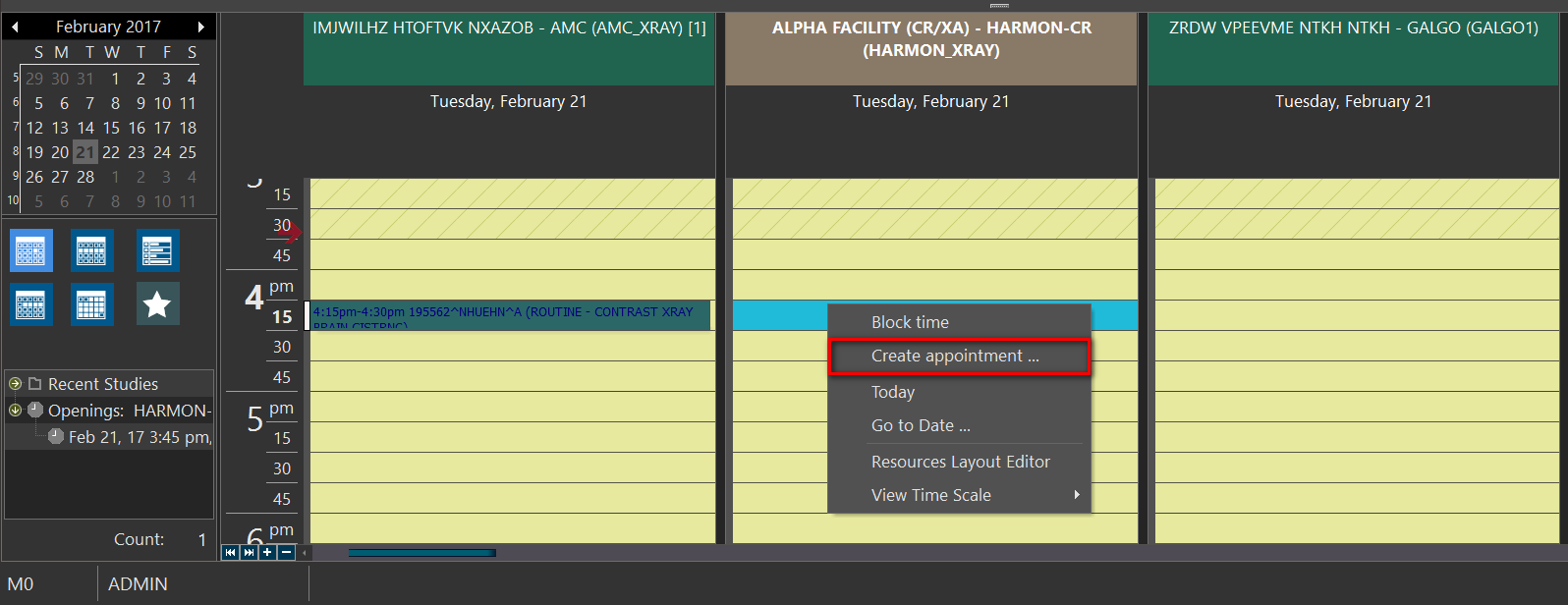
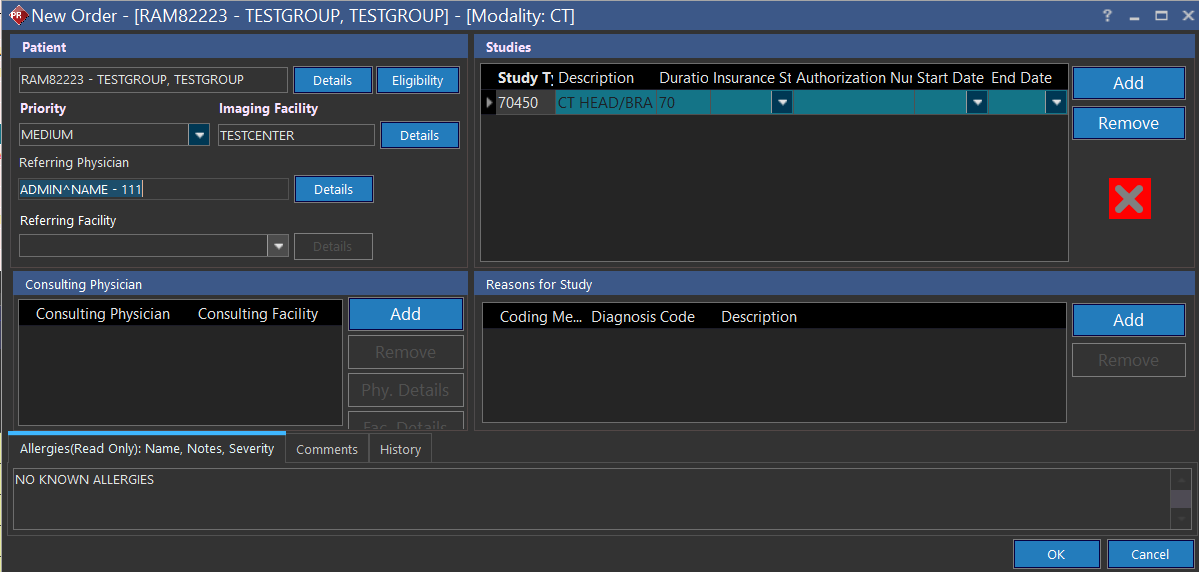
A second method for creating an appointment is by choosing the Create New Appointment option on the menu bar and opening the form. Note that in the below screenshot, the "Schedule Selected Study" button is not visible on the right-click menu. This is because the selected study does not match the modality of the chosen resource; the New Order window will be displayed allowing the user to create a new Order and schedule it.
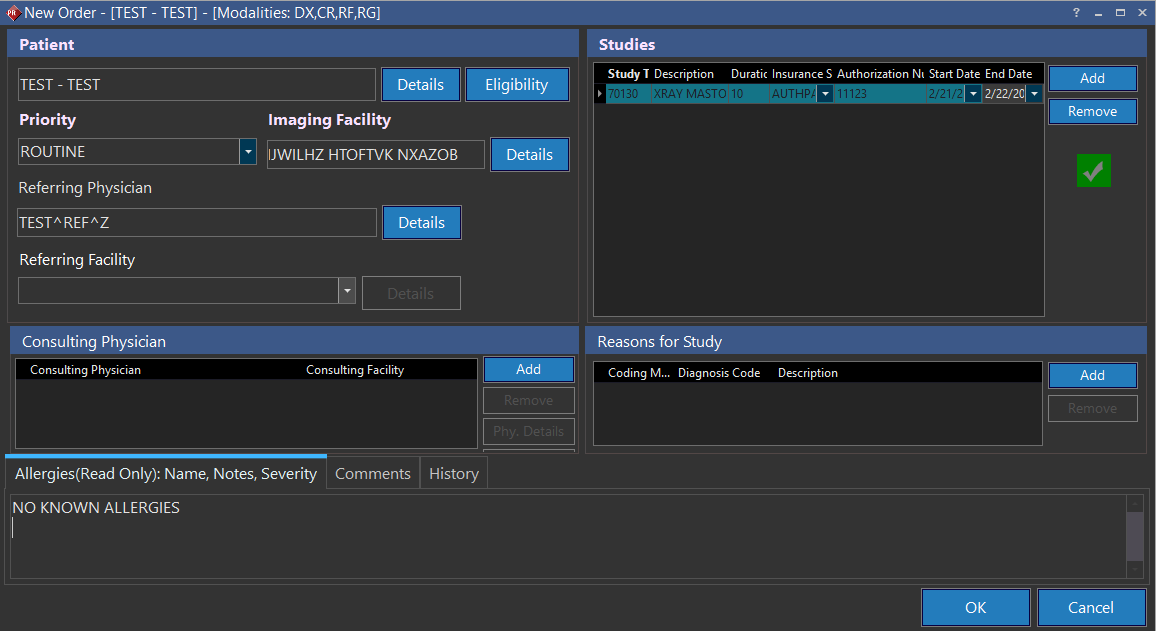
A list of Modalities of the Study Types is available at the top of the New Order form. Appointment for a desired patient can be scheduled by searching the patient in the Patient box. Entering data will create a meta-search which can be based on the patient's First name, Last name and Patient ID. Once a Patient is selected, the other Patient Information fields are populated. The Referring Physician, Study Type also should be filled in. The Allergies field is read-only and is created from Patient Info. Once the study is ready to be scheduled, the OK button is pressed. If a patient does not exist, clicking the New.. link in the meta search will launch the Patient Registration form. Hence the patient can be registered and an appointment created at the same time. The Referring Facility field allows input and selection only after entering a valid Referring Physician.
Method 3: Dragging appropriate resource in Scheduler
A third method for scheduling a study is by dragging them to the appropriate resource in the scheduler. For scheduling of a study, the resource's modality and the study's Scheduled Modality have to be the same. The study should be at the status of ORDERED (a status below SCHEDULED status). When you change an appointment date and time, the system automatically updates the Study date and time in the Study Info screen.
Method 4: Double-clicking slot in Scheduler
A fourth method for scheduling an appointment is by double-clicking on a slot on the scheduler. This will launch the New Order form again and then the steps can be followed as explained above.
Note that by default a minimum of 15 minutes is applied to StudyType durations for appointments scheduled with less than 15 minutes time slot.
Scenario: StudyTypes Duration Exceeding Available Time Slot
When you try scheduling a study for an appointment with a time slot extending to an existing appointment time slot, the system indicates the overlap with an X symbol marked in red colored box.
If you click OK, the following confirmation message is displayed:

If you click OK, the study will be created and will be in "Ordered" status.
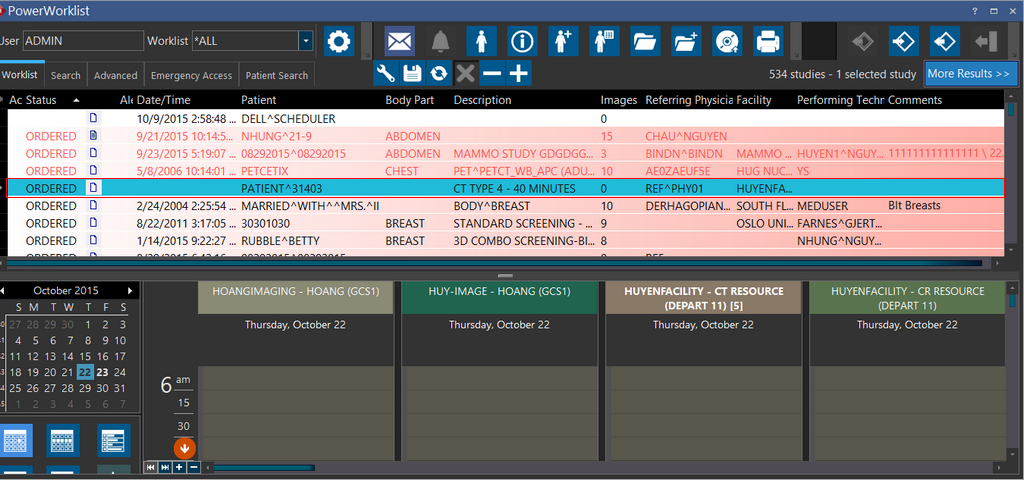
You can choose to cancel scheduling the appointment and select an available time slot.
A patient cannot be scheduled at two different locations at the same time. If a study is being scheduled which can last beyond the closing time of the facility, the scheduler will let the user schedule the study, as long as the appointment starts before the closing time. The users are also allowed to extend the finishing time of an appointment beyond the finishing time of the resource.
If two users are attempting to book appointments in the same time slot, the scheduler will block the latter user from booking an appointment. A message prompt specifying that "New Study Order in Progress - User XYZ" is visible. Also, once an appointment has been booked, the appointment cannot be changed through the Study Info form.
Referring Physician Meta-Search
When you try searching for a Referring Physician, the Referring Physician information is meta-searched using the following rules:
- If you enter the Last Name, Middle Name and First Name of the Referring Physician, the system uses all these three entries to populate the Referring Physician information.
- If you enter only the Last Name and the First Name of the Referring Physician, the system uses both these entries to populate the Referring Physician information
- If you enter only a name of the Referring Physician, the system populates searches for the text and if found either in the Last Name or First Name, populates the Referring Physician information.
Blocking a certain time period of the resource
If the Reservation option has been checked in the Resources section of the Imaging facilities tab, the Block time option will be displayed.
Choosing the Block time option creates a marker which does not allow scheduling of any event in that time slot. This marker behaves exactly like a scheduled study. To block a certain time, highlight the time slot and then right-click the mouse to choose the Block time option. New Block Time screen appears as shown below.

The user can choose a specific reason from the drop-down menu for the block time or leave it blank. After the time has been blocked, the scheduler will display the blocked time.

The blocked time slot can be unblocked by right clicking on it and selecting Unblock. For more information on blocking a time entry in the scheduler, please refer to the topic How Do I Block a Time Entry in the Scheduler?
Scheduling an All Day event
You can block a resource for the entire day by All Day Slot. It can be performed by dragging an appointment to the area below the Day and Date information grid beneath the Resource Name.

Once you create an All Day event, the All Day event area turns blue in color and the resource will be blocked for the entire day and no studies can be scheduled at the resource for the entire day.
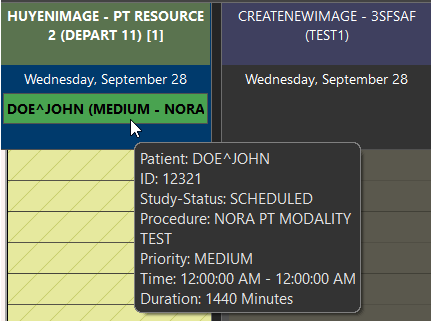
You can drag an appointment out of the All Day area and schedule it on any available time slot. Once you drag out of the All Day area and schedule an appointment for a specific time slot, the Create Appointment option on the right-click menu is available for all the other available slots for that day.
You can view today's schedule by clicking Today or go to a certain date by choosing Go to Date. When you are in a future date and would want to get back to the current date view, clicking the Today option in the right-click menu brings the resource scheduler to the current date's view.
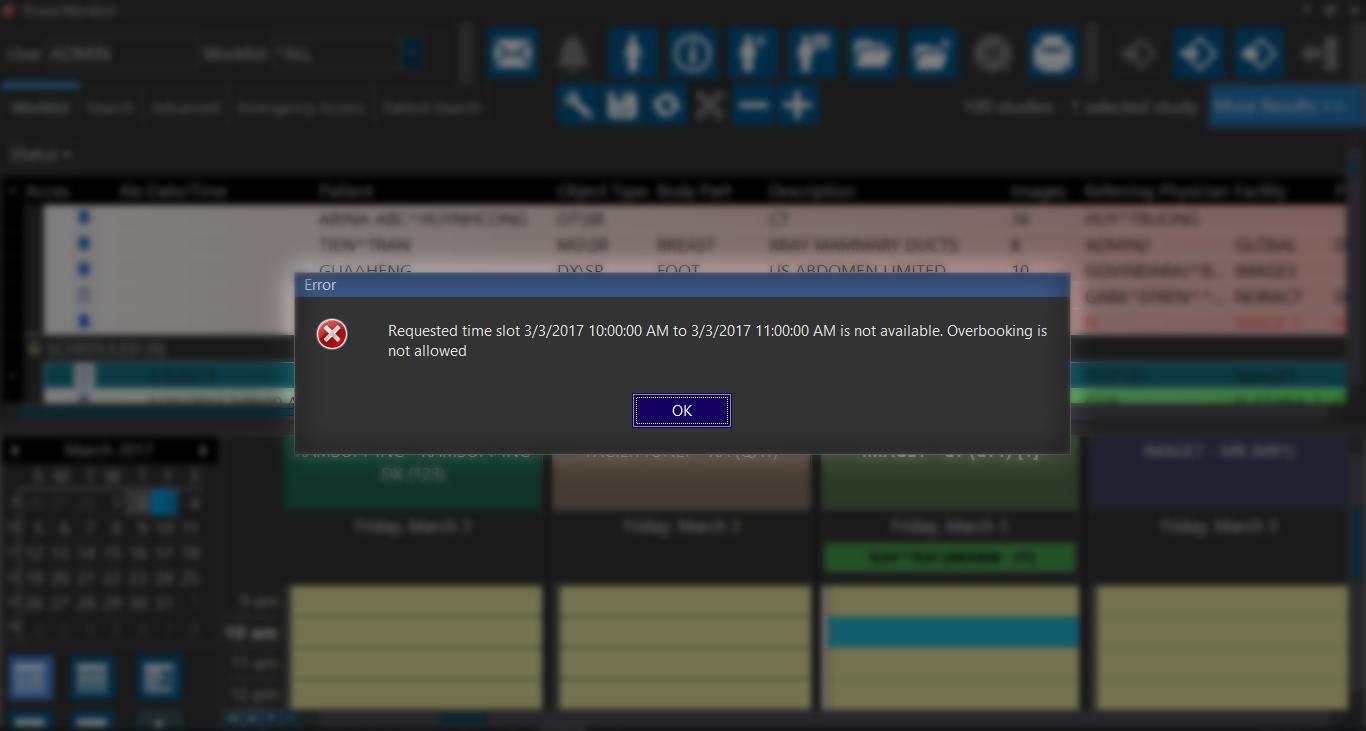
Once you schedule an all day event that doesn't allow overbooking, you would no longer have the Create appointment option upon right-clicking on the area without selecting it. However, when a user selects a time slot with an All-Day appointment, the "Create appointment" can be clicked; if clicked, the Error message "Requested time slot xxx to xxx is not available. Overbooking is not allowed" is displayed:

Overbooking
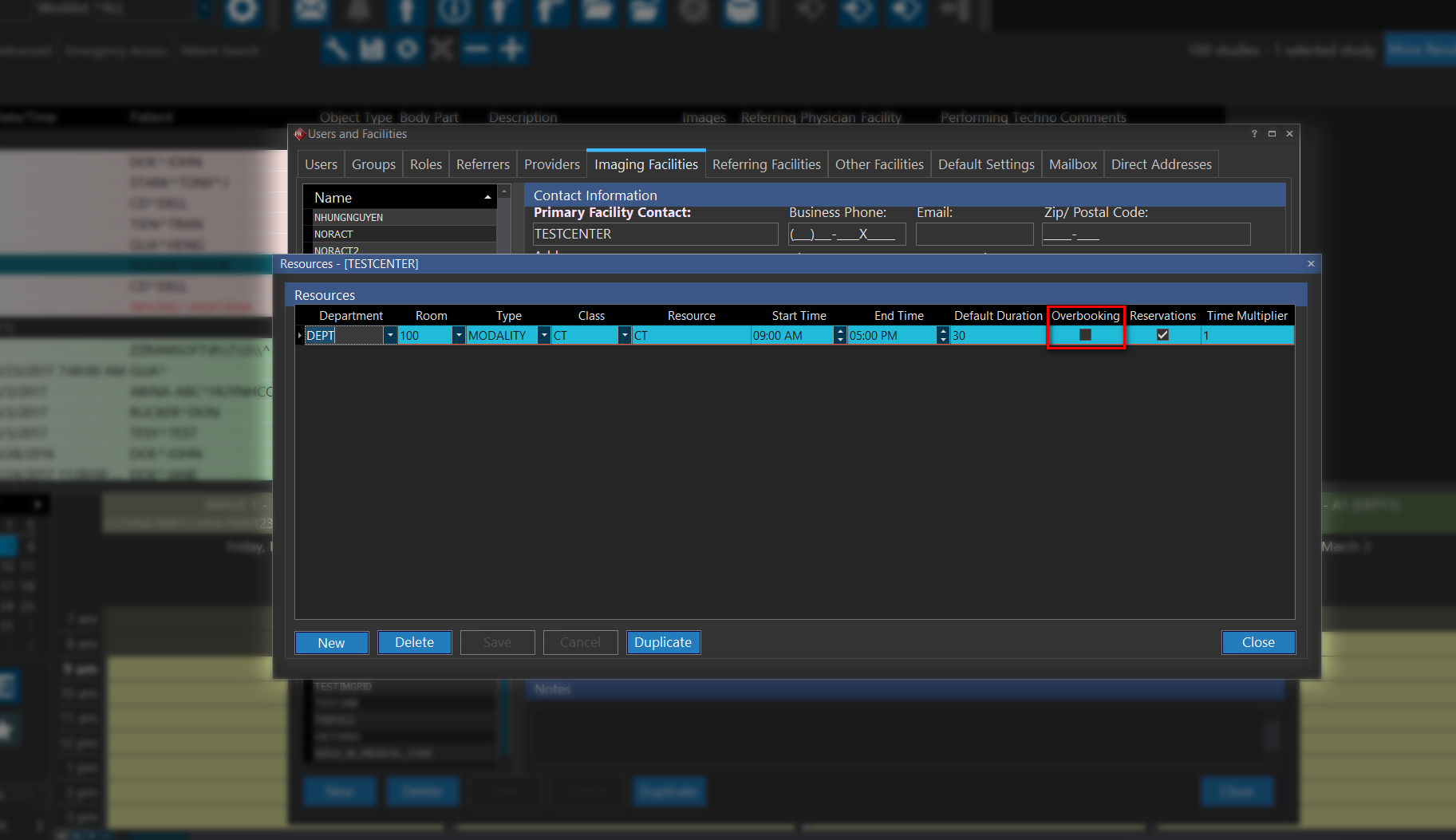
The Overbooking option allow a resource to be scheduled even when it has already been booked in that time slot, or is blocked in that time slot. To enable the Overbooking option for a resource, navigate to Users and Facilities: Imaging Facilities: Resources and click on the "Overbooking" checkbox.
Scheduling Appointments in the Past
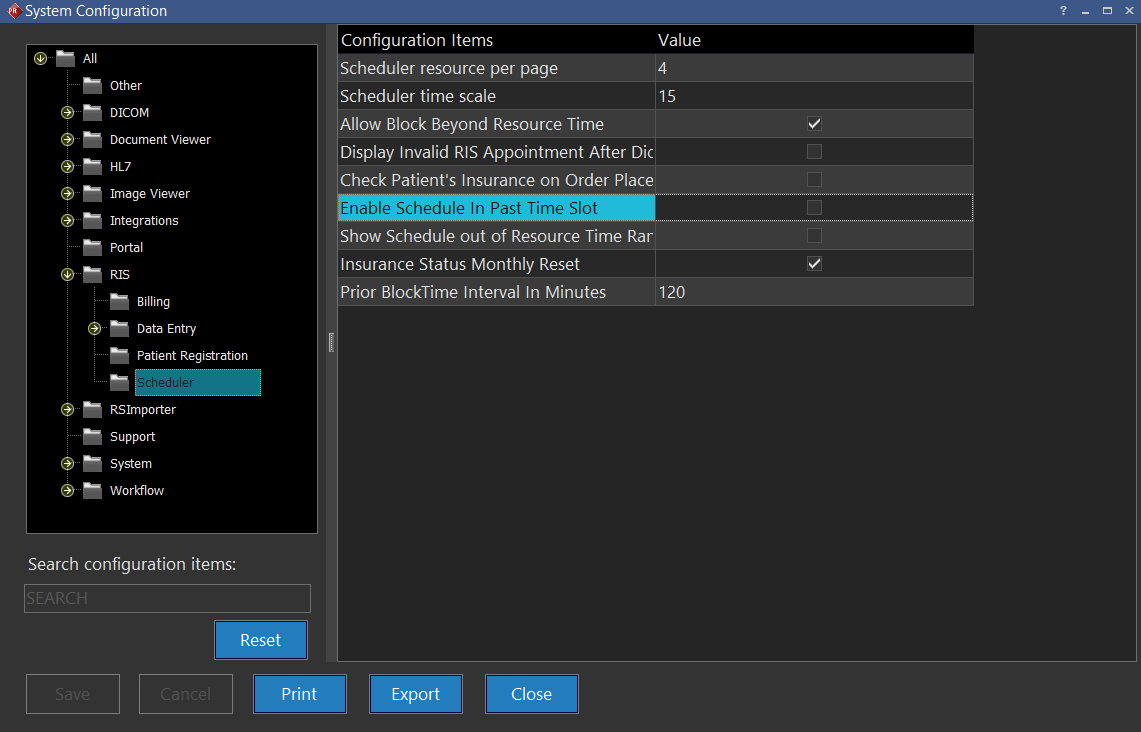
If the "Enable Schedule in Past Time Slot" is unchecked in System Settings (below), appointments cannot be scheduled in the past.
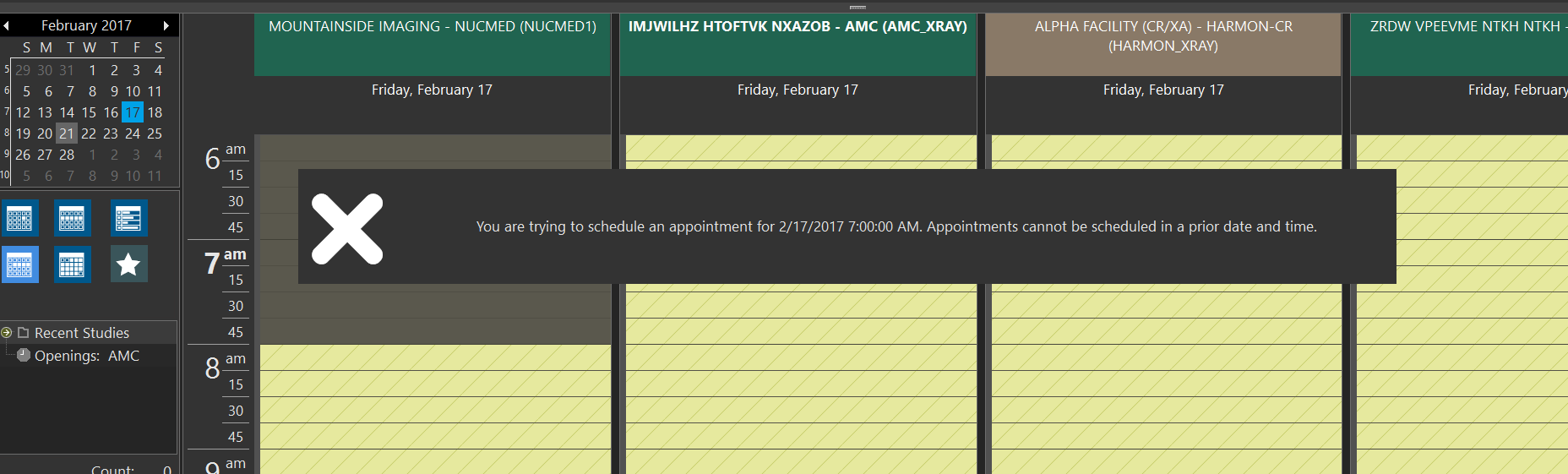
You can drag an existing appointment to up to 24 hours in the past, in the event that the user needs to make a quick correction to an existing appointment time.
Resource layout editor
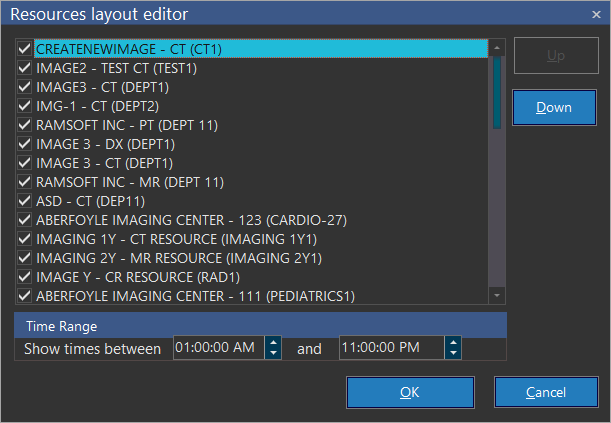
The Resource Layout Editor is used to specify the resources displayed. The order of the resource display can also be changed with the Up and Down buttons in the resource edit.
The following five icons at the bottom of the scheduler can be used to change the visual layout of the resources:
| Icon | Name | Description |
|---|---|---|
 | First Resource | Scrolls horizontally to the first resource |
 | Last Resource | Scrolls horizontally to the last resource |
 | Show More Resource | Increases the number of resources shown at one time in the scheduler |
| Show Less Resource | Decreases the number of resources shown at one time in the scheduler |
 | Save Layout | Saves the current resource layout, including modifications in the Resource Layout Editor |
The users will be able to see resources from the facility they are a part of. However, System Wide Administrators and users who are not bound to any particular facility will be able to see resources from all the facilities. The editor has a Time Range section. The user can select the timings of their facility in this section. These will be the timings displayed in the scheduler and studies can be scheduled in those time slots. If the user selects a closing time which is less than or equal to the opening time, an error message is displayed indicating that the end time must be greater than the start time.
Changing the Study Date after it has been Scheduled
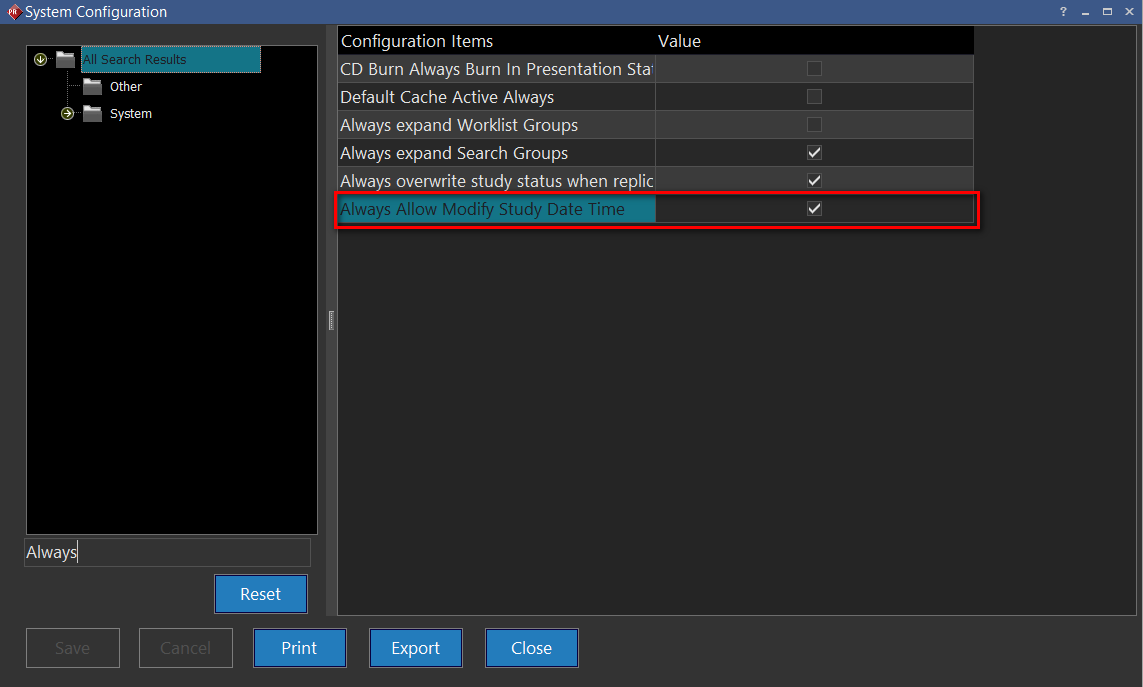
With the option "Always allow Modify Study Date Time" checked, study dates can be altered after they are scheduled.
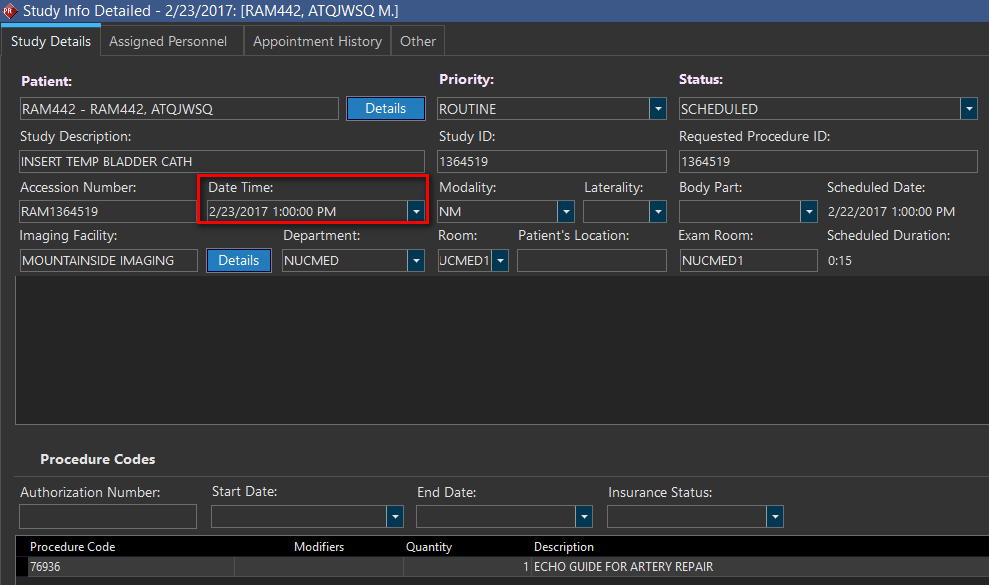
Click on Study Details: Date Time to alter the study Date and Time as necessary.
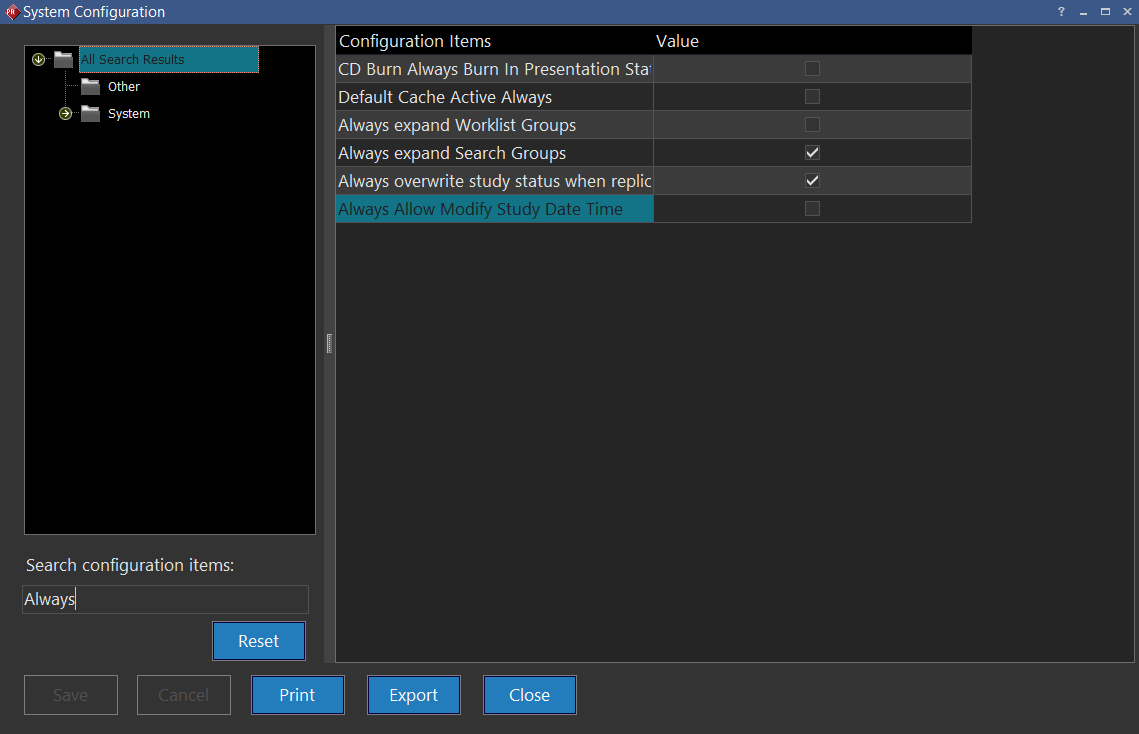
With the option unchecked, Study Date and Time can only be modified if they are outside the Scheduled to Complete status.
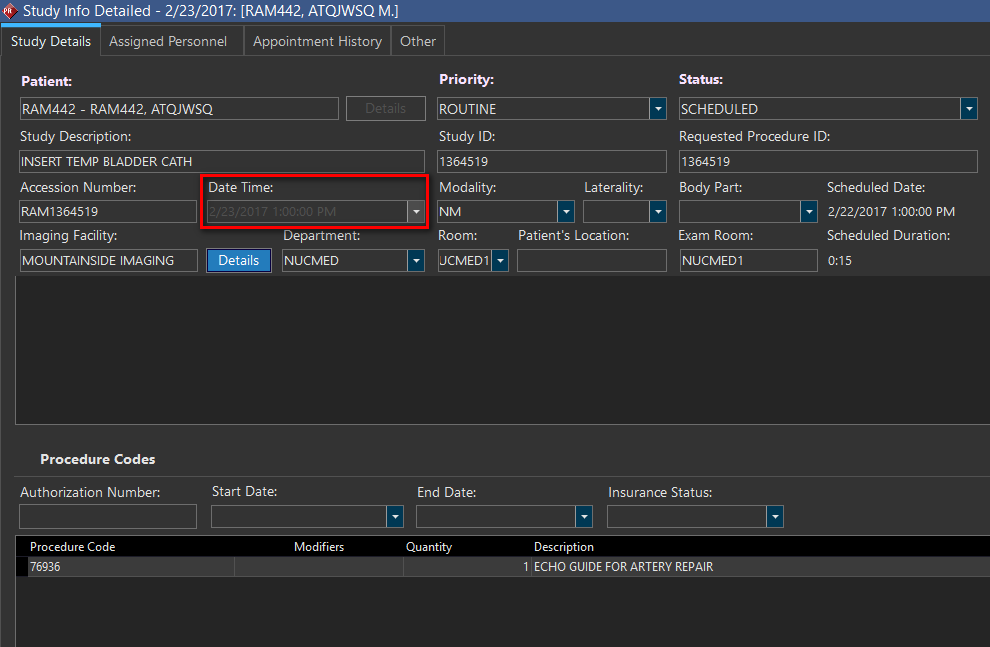
The Date and Time of Studies between the Scheduled to Complete Status cannot no longer be modified. If a study status is outside Scheduled to Complete, it's Date Time can be modified in Study Details, but the change will not be reflected on the Scheduler, and can only be seen in Study Details.
Changing the appointment status of a study
Once a study is booked you can change its duration by clicking, holding and dragging its top or bottom borders. You can also move it around by clicking inside its box, holding and dragging. By right clicking on a study you can do the following things:
- Confirmed – sets the study's status to CONFIRMED
- Arrived – sets the study's status to ARRIVED
- Ready For Scan - sets the study's status to READYFORSCAN
- Need to reschedule – sets the study's status to ORDERED
- Cancelled w/ notice – sets the study's status to cancelled and removes the study from the scheduler
- No show – sets the study's status to cancelled
The Create appointment.. option will open the New Order form and the study can be ordered.
Right Clicking and choosing the Confirmed, Arrived, Ready For Scan statuses will change the background color of scheduled study to that defined in the Worklist.

If the user chooses the Need to reschedule, cancelled w/ notice or No Show as the status, a confirmation box will be displayed.

In the example above, when Need to reschedule option is chosen, a conformation box is displayed. If the user chooses Yes, the study will be assigned ORDERED status.
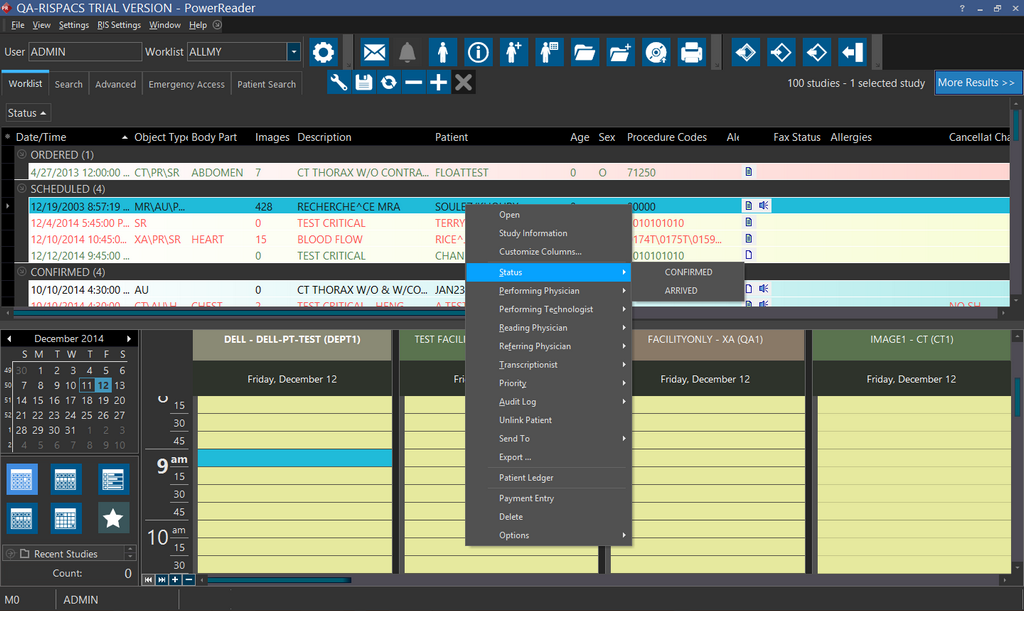
The various changes to a scheduled study's status can also be performed through the Worklist. To change the status of a scheduled study (i.e. Confirmed, cancelled, etc.), right-click the study in the Worklist and choose Status >> desired status for the appointment. The user will be able to choose any status from the Worklist which is available in the Scheduler except "No Show" status. The audit trail will also be updated accordingly. This change of status is also available in study info form. If the user opts to change the study status from the study info form, the form must be closed and reopened for the changes to be visible in the appointment history.